
Lord Jagannath Snana Yatra 2026
Every year, millions of devotees eagerly wait for the grand festivals of Lord Jagannath in Puri, Odisha. One of the most sacred festivals is Snana Yatra, also known as the Bathing Festival of Lord Jagannath. In 2026, this holy festival was celebrated on 29 June.
Although the festival has already passed, its spiritual meaning and ancient traditions continue to inspire devotees around the world. Snana Yatra is much more than a ceremonial bath. It marks the beginning of a beautiful journey that leads to the world-famous Rath Yatra.
In this article, we will explore the history, rituals, significance, and interesting facts about Jagannath Snana Yatra.
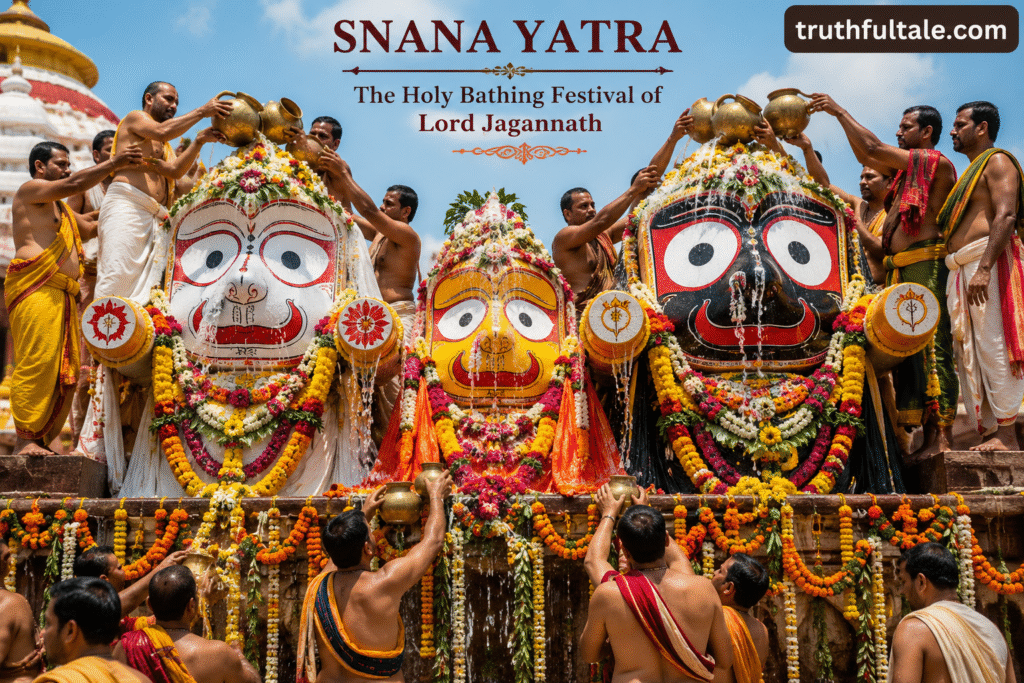
What is Jagannath Snana Yatra?
Snana Yatra is the annual ceremonial bathing festival of Lord Jagannath, Lord Balabhadra, and Goddess Subhadra. It is celebrated on the full moon day (Purnima) of the Hindu month of Jyeshtha.
On this day, the three deities are brought out from the sanctum of the temple to the Snana Mandap, a special bathing platform, where devotees can have their divine darshan.
This is one of the very few occasions when the deities are seen outside the sanctum before Rath Yatra.
History of Snana Yatra
The tradition of Snana Yatra is believed to be thousands of years old. Ancient scriptures such as the Skanda Purana, Brahma Purana, and Padma Purana mention the importance of this sacred bathing ceremony.
According to tradition, King Indradyumna, the legendary founder of the Jagannath Temple, began many of the temple rituals, including Snana Yatra. Over the centuries, this festival became an important part of the annual Jagannath traditions in Puri.
Today, it attracts thousands of pilgrims and visitors from across India and many other countries.
Why is Snana Yatra Celebrated?
The festival has both spiritual and symbolic meaning.
The ceremonial bath represents purification, renewal, and divine blessings. It reminds devotees to cleanse not only the body but also the mind and heart through devotion and good deeds.
It also marks the beginning of the events that lead to the famous Rath Yatra.
How is Snana Yatra Performed?
The rituals follow a traditional sequence:
- Pahandi Bije
The deities are carried from the sanctum to the Snana Mandap in a grand procession with devotional music, drums, and chanting.
- Holy Bath
The deities are bathed with 108 pots of sacred water drawn from the temple’s sacred well. The water is mixed with fragrant herbs, sandalwood, flowers, and other sacred ingredients.
- Elephant Decoration (Hati Besha)
After the bath, Lord Jagannath and Lord Balabhadra are dressed in a special elephant form, known as Hati Besha or Gajanana Besha. This unique decoration symbolizes Lord Ganesha and is loved by devotees.
- Anavasara
After the ceremonial bath, it is believed that the deities develop a fever due to the large amount of water used during the ritual.
They remain away from public view for about 15 days. This period is called Anavasara. During this time, special Ayurvedic herbs and traditional medicines are symbolically offered to help the deities recover.
What Happens After Anavasara?
After the period of rest, the deities appear before devotees in a beautiful ceremony called Nava Jaubana Darshan, where they are believed to have regained their youthful appearance.
Soon after this, the grand Rath Yatra begins, during which Lord Jagannath, Lord Balabhadra, and Goddess Subhadra travel in magnificent wooden chariots to the Gundicha Temple.
Spiritual Significance
Snana Yatra teaches several spiritual values:
- Purity of body, mind, and soul.
- Humility before God.
- Faith and devotion.
- Renewal and fresh beginnings.
- Divine compassion for all devotees.
The festival reminds us that even the Lord follows human-like emotions and experiences, making Him feel closer to His devotees.
Interesting Facts About Snana Yatra
- It is the first public appearance of the deities before Rath Yatra.
- Exactly 108 sacred pots of water are traditionally used for the bathing ceremony.
- The sacred water is collected from a special well inside the temple complex.
- During Anavasara, devotees traditionally visit the Alarnath Temple because Lord Jagannath is not available for public darshan.
- The Hati Besha decoration is seen only once every year.
Why is Snana Yatra Important for Devotees?
Devotees believe that witnessing Snana Yatra brings spiritual merit and blessings. The festival strengthens faith, encourages devotion, and prepares everyone for the joyful celebration of Rath Yatra.
For many pilgrims, this festival is an emotional experience because it allows them to see Lord Jagannath outside the sanctum in a rare public ceremony.
Jagannath Snana Yatra is not just a festival—it is a celebration of devotion, tradition, and divine love. The sacred bath, the beautiful Hati Besha, the Anavasara period, and the journey toward Rath Yatra together create one of the most unique spiritual celebrations in Hinduism.
Even though the 2026 Snana Yatra was celebrated on 29 June, its message of purity, faith, and devotion continues to inspire millions of devotees across the world.